
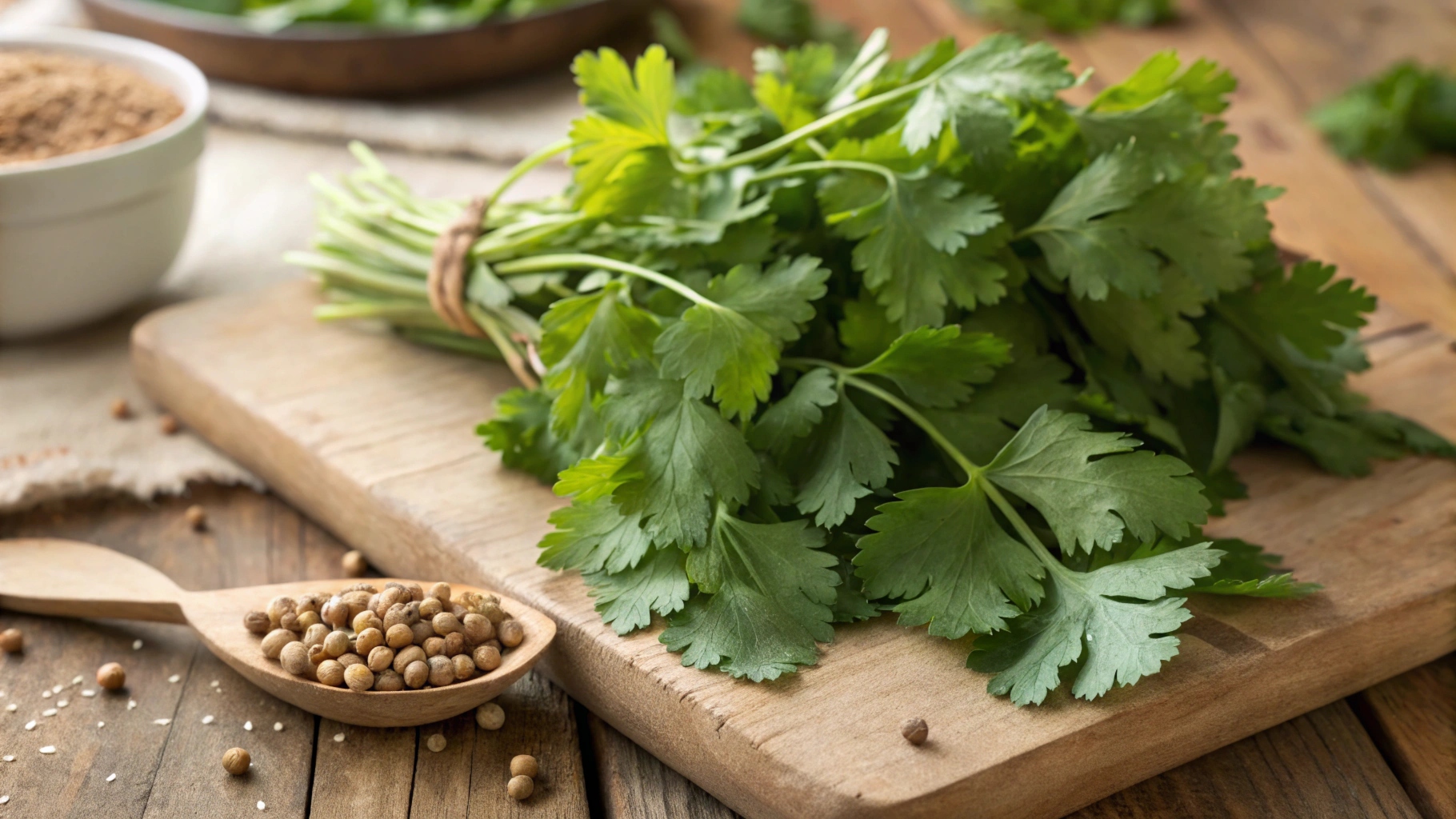
Hello there, friend! Have you ever heard a funny word called Koriandri? It might sound like a name for a friendly dragon from a storybook, but it is actually something you can find in your kitchen or in a garden! Koriandri is another name for a plant that many grown-ups call cilantro or coriander. It is a bright, leafy green herb that looks a bit like parsley. Its leaves are soft and shaped like little, delicate fans or ruffled skirts. People all over the world love to use Koriandri in their cooking because it adds a very special flavor that makes food taste fresh and happy. In our big adventure today, we are going to learn all about this amazing plant. We will find out where it comes from, why some people think it tastes like soap, how it can make you feel strong, and even how you can grow your very own Koriandri plant in a little pot. So, put on your explorer hat, and let’s go on a journey to the land of this magical green leaf!
Now, you might be wondering, “Where did Koriandri come from a long, long time ago?” Well, let’s hop into our imaginary time machine! Koriandri is a very old plant. It did not start in a supermarket. It started growing wild in places far away, like near the Mediterranean Sea and in parts of Southwest Asia. Thousands of years ago, even before big pyramids were built, people found this plant and discovered its wonderful taste. They started to use its leaves and its little round seeds in their food. Ancient Egyptians even put Koriandri seeds in tombs because they thought it was a special gift. The plant liked to travel, just like people do. It went on adventures with traders and explorers on ships and along dusty roads. Soon, it found new homes in countries like India, Mexico, China, and all across Europe. Every place it visited, people welcomed it and made it a part of their special recipes. That is why today, you can find Koriandri making food delicious in a taco in Mexico, a curry in India, and a salad in Lebanon.
Let’s talk about the most exciting part—the taste and smell of Koriandri! This is where things get very funny. When you take a fresh leaf of Koriandri and crush it gently between your fingers, it lets out a very strong smell. To many people, this smell is wonderful. It is fresh, a little citrusy like a lemon, and a little peppery. It smells like a clean, sunny garden after the rain. It makes your mouth feel excited for the next bite of food. But here is the funny secret: to some people, Koriandri does not smell like a garden at all. To them, it smells just like soap or bugs! Isn’t that silly? Scientists have found out that this is not because those people are being picky. It is actually written in their DNA, which is like a tiny instruction book inside every cell of our bodies. Some instruction books say Koriandri is yummy, and some say it is soapy. So, if you try Koriandri and make a funny face, it is okay! Your body is just reading its own special book. But if you like it, you have a super-taster tongue for fresh, zesty flavors.
Did you know that Koriandri is not just a tasty leaf? It is also like a tiny vitamin superhero for your body! Eating fresh greens is always a good idea, and Koriandri is packed with good things. It has something called vitamins. Vitamins are like tiny helpers that keep our bodies running smoothly. Koriandri has lots of Vitamin A, which is great for your eyes, helping you see clearly in the dark like a little cat. It also has Vitamin C, which is the same vitamin that is in oranges. Vitamin C is like a shield for your body, helping to keep you from getting sniffles and colds. There is also Vitamin K in Koriandri, which helps if you get a small cut, by making sure the blood knows how to stick together and stop the bleeding. Plus, it has special things called antioxidants. Think of antioxidants as little guards that protect the cells in your body from naughty invaders. So, adding a handful of Koriandri to your meal is like calling in a team of superheroes to keep you healthy and strong.
Also Read Here: Pappedeckel: A Simple Guide to Understanding This Useful Material in Everyday Life
The magic of Koriandri does not stop at being healthy. It is also a superstar in the kitchen! This herb is used in so many different kinds of food all around our beautiful planet. In Mexico, they chop up the fresh leaves and sprinkle them on top of tacos, salsa, and guacamole. It adds a cool, fresh taste next to the spicy flavors. In many parts of Asia, like Thailand and Vietnam, they put whole springs of Koriandri in soups and on top of noodle dishes. They even use the roots to make pastes for curries because the roots have an even stronger, earthier flavor. In India, they use both the fresh leaves, which they call “dhania,” and the dried seeds. The seeds are brown, round, and have a warm, nutty, and slightly citrusy smell when crushed. They are often ground into powder and added to curry powders and stews. In the Middle East, Koriandri is mixed with parsley and other ingredients to make a yummy salad called tabbouleh. It is amazing how one plant can be a citizen of the world, making friends with so many different flavors.
Maybe after learning all this, you want to become friends with Koriandri yourself. The very best way to do that is to grow your own plant! Growing Koriandri is a fun and easy project. You do not need a big farm. You can start with just a little pot on a sunny windowsill. First, you need some seeds. You can find Koriandri seeds (which are actually the dried coriander seeds) at a garden store. Get a small pot and fill it with soft, black soil. Make little holes in the soil with your finger, about as deep as your first fingernail. Drop a seed or two in each hole, cover them gently with soil, and give them a little drink of water. Place the pot where it can get lots of sunshine. Now, you have to be patient and kind. Water your pot a little bit every day or when the soil looks dry. In about one or two weeks, you will see a tiny green shoot saying hello to the sun! That is your baby Koriandri plant. Keep caring for it, and soon you will have your very own bunch of fresh leaves to pick.
When you have your fresh Koriandri leaves, it is time to play with them in the kitchen! But first, you need to know how to get them ready. Always wash the leaves under cool, running water to make sure they are nice and clean. Gently shake off the extra water or pat them dry with a soft kitchen towel. Then, you can pull the leaves off the tough stems. The stems have flavor too, but they are a bit chewy, so most people like to use just the tender leaves. Now, how do you chop them? Ask a grown-up to help you with a safe, not-too-sharp knife. You can bunch the leaves together and rock the knife back and forth to make small pieces. Remember, Koriandri has a very bold flavor, so you do not need to cook it for a long time. In fact, it is best added right at the end of cooking or just sprinkled on top of your finished dish. This keeps its bright green color and its super-fresh taste. Try adding your chopped Koriandri to scrambled eggs, on top of a bowl of soup, or mixed into plain yogurt with a little salt to make a quick dip.
We talked about the fresh green leaves, but the Koriandri plant has another surprise for us—its seeds! When the plant grows very tall and gets little white or pale pink flowers, those flowers turn into seeds. These seeds are called coriander seeds. They do not taste exactly like the leaves. They are warmer, a little sweet, and have a hint of orange peel. These seeds are usually dried and used whole or ground into a powder. You can find them in the spice aisle at the store. Coriander seed powder is a key member of the spice team in many kitchens. It is in the powder that makes curry taste like curry. It is also in pickling spices, which are used to make pickles crunchy and tasty. Some people even toast the seeds lightly in a pan to make their smell even stronger before using them. So, from one plant, you get two fantastic flavors: the zesty, fresh leaves and the warm, cozy seeds. It is like getting two presents in one!
Let’s have some fun with Koriandri beyond just eating it! Because it has such a strong and lovely smell, Koriandri can be used in other creative ways. Long ago, people used it for more than just food. They believed it could help calm an upset tummy. Some cultures still make a gentle tea from the seeds to help with digestion. You can also do a simple science experiment. Take a few Koriandri leaves and crush them in one hand. Smell your hand. Now, rub a piece of lemon peel and smell it. Do they smell a little bit the same? That’s because they share some of the same oily chemicals that make their scent! You can also use the leaves for a colorful art project. Place a leaf under a thin piece of paper and gently rub over it with the side of a crayon. You will see a beautiful leaf print appear, like magic. This way, you can learn about the shape and veins of the Koriandri leaf.
Our journey with Koriandri is almost at the end, but we have learned so much! We learned that Koriandri is a friendly, leafy green herb that has been traveling the world for thousands of years. We discovered that its taste can seem like a bright, fresh garden or even like soap, depending on who you are. We found out it is full of vitamin superheroes that help our eyes, our immune system, and our bodies. We saw how it dances in kitchens from Mexico to India, making tacos, curries, and soups taste amazing. We even learned how to grow our own plant in a pot and how to chop its leaves to add a burst of flavor to our food. And let’s not forget its twin gift, the warm coriander seed. Koriandri teaches us that even a small, simple leaf can have a big story and can bring lots of joy and health to people everywhere. So, next time you see this green herb, you can smile and say, “Hello, Koriandri! I know all about your adventures.”